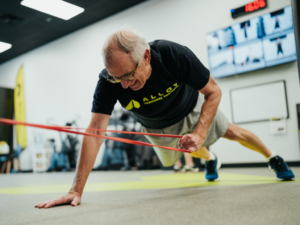
To stay fit for travel, adventure, and everyday life means training your body to be capable, resilient, and adaptable—wherever you are, and whatever life throws at you.
Read more: How to Stay Fit for Travel, Adventure, and Everyday LifeTravel introduces stress from time changes, poor sleep, unfamiliar food, and unpredictable schedules. Resilient fitness means your body can handle these variables without breaking down. That comes from: strength training under control, gradual increases in volume and intensity, adequate recovery and sleep, and consistent movement, not extremes.
The goal is durability. When your body is resilient, missing a workout or eating differently for a few days doesn’t derail you—it barely registers.
Fitness Isn’t About Looking Good on Vacation—It’s About Enjoying It
Too often, fitness is treated like a temporary project: train hard before a trip, “earn” vacation food, then fall off completely once you’re home. But real fitness shows up during the trip. It’s walking 20,000 steps through a new city and still having energy for dinner. It’s climbing stairs in a historic building without searching for the elevator. It’s feeling confident trying something new instead of worrying about injury or exhaustion.
The goal isn’t to survive your vacation—it’s to enjoy it.
Most people say they want to “get in shape,” but what they really mean is something more specific. Life doesn’t happen in controlled gym environments. Airports require long walks and awkward loads. Adventures involve uneven terrain, heat, cold, or altitude. Everyday life includes bending, lifting, twisting, and carrying. Fitness that only works in the gym doesn’t work where it matters most.
That means your training should build capacity to:
- Hike without their knees hurting.
- Carry luggage through an airport without getting winded.
- Keep up with their kids.
- Endurance to stay active for long periods.
- Carry luggage, backpacks, and gear.
- Hike, climb, and explore without joint pain.
- Maintain posture during long flights or drives.
- Recover faster from physically demanding days.
Ways To Stay Fit For Traveling
1. Functional Strength Training Is the Foundation
If you want to stay fit for travel and adventure, strength training isn’t optional—it’s essential.
Prioritize these functional strength movements that translate to real-world activities. You don’t need to lift maximal weights. Strength train to handle your own body weight and external loads.
- Squats and lunges (stairs, hills, uneven ground)
- Hinges (lifting bags, picking things up safely)
- Pushes and pulls (carrying, climbing, stability)
- Loaded carries (farmer carries, suitcase carries)
2. Cardio That Supports Real Life
Cardio doesn’t have to mean endless treadmill miles. For travel and adventure, the goal is to work for the capacity to keep moving without fatigue shutting you down. The most useful forms of cardio include:
- Brisk walking
- Hiking
- Cycling
- Rowing
- Short bursts of higher intensity mixed with recovery
Being able to sustain moderate effort for long periods matters far more than being able to suffer through a single hard workout. If you can walk for hours, climb hills, and recover quickly, you’re winning.
3. Mobility: The Difference Between Moving and Moving Well
Mobility often gets ignored until it becomes a problem. Tight hips make long flights miserable. Stiff ankles turn uneven terrain into a risk. Limited shoulder mobility makes lifting bags overhead uncomfortable—or painful.
You don’t need long stretching sessions—just consistent, intentional movement. You need the mobility to move well in unfamiliar positions and the stability to prevent injuries when conditions aren’t ideal. Increase your movement in these areas:
- Hip mobility (flexion, extension, rotation)
- Thoracic spine mobility (rotation, extension)
- Ankle and calf mobility
- Shoulder range of motion
Good mobility allows you to move comfortably in unfamiliar environments, adapt to new activities quickly, and reduce soreness and stiffness from travel
4. Food While Traveling Is Fuel For Movement, Not Restriction
Food during travel often becomes all-or-nothing: either total restriction or complete indulgence. Neither supports performance. You don’t need perfect nutrition. You need enough nutrition to support movement. When you fuel well, your body feels capable instead of sluggish. If you want energy for exploration:
- Prioritize protein at meals
- Eat carbohydrates to support activity
- Stay hydrated—especially when flying
Don’t skip meals and then overeat later
Fitness on the Road: Keep It Simple
You don’t need a perfect plan while traveling, you need to prepare for movement. Simple rules that work anywhere:
- Walk whenever possible
- Use stairs instead of elevators
- Do short bodyweight circuits in your hotel room
- Stretch and move after long flights or drives
A 20-minute session of squats, push-ups, lunges, planks, and mobility work can maintain fitness far better than doing nothing. Consistency beats complexity every time.
The Long-Term Mindset: Freedom To Live Life
Staying fit for travel and adventure isn’t about peaking for one trip, but for anything life demands. If your training supports your life instead of competing with it, you’re doing it right. Everyday life is the real test. It’s how you feel at the end of a long day, after a physically demanding weekend, or when plans change unexpectedly.
When fitness becomes part of your lifestyle—not a seasonal push—you stop asking, “Can I do this?” and start asking, “What’s next?” Fitness shouldn’t confine you to the gym. It’s meant to expand your world. Training with variety—different loads, speeds, positions, and environments—prepares your body for these moments. Fitness isn’t about predictability. It’s about adaptability.
When you train for strength, endurance, mobility, and resilience, you gain freedom—the freedom to explore, travel, adventure, and fully engage in everyday life. Get with you Alloy
Train for the life you want to live. Your body will take you there.