The American College of Sports Medicine(ACSM) has released a new resistance training position stand with the ACSM strength training guidelines. The message is both science-backed and refreshingly practical: the best strength training plan is the one you can actually do consistently.
Read more: Key Insights Of The New ACSM Strength Training GuidelinesThe new ACSM guidelines outlines the position in Resistance Training Prescription for Muscle Function, Hypertrophy, and Physical Performance in Healthy Adults. The new guidelines are a major update to the organization’s last published 2009 guidance on resistance training progression. Over 17 years ago. The new strength training guidelines included synthesized findings from 137 systematic reviews and more than 30,000 participants, making it one of the most comprehensive summaries of resistance training research available for healthy adults.
For anyone trying to build strength, improve muscle tone, move better, age stronger, or simply feel more capable in daily life, the takeaway is clear: resistance training matters, and it does not have to be complicated to work.
At Alloy Personal Training, that message lines up closely with what we see every day. People do not need a perfect program, extreme workouts, or advanced lifting methods to make progress. They need a plan that fits their body, their goals, their schedule, and their life.
Strength Training Is Foundational For Adult Fitness
Resistance training, also known as strength training or weight training, involves working your muscles against an external form of resistance. That resistance can come from dumbbells, machines, bands, cables, body weight, suspension trainers, or other tools.
According to the ACSM position stand, resistance training improves multiple outcomes that matter for health and performance, including muscle strength, hypertrophy, power, muscular endurance, contraction velocity, gait speed, balance, and physical function.
That last part is important. Strength training is not just about lifting heavier weights or changing how your body looks. It is also about how well your body performs in the real world.
Can you climb stairs more easily? Get up from a chair with confidence? Carry groceries without strain? Maintain balance as you age? Keep up with your kids or grandkids? Return to activities you enjoy?
Resistance training supports those everyday wins.
The ACSM materials also note that strength training is associated with broader health benefits, including improved sleep quality and overall health, along with reduced risk related to mortality, cardiovascular disease, cancer, diabetes, and depression.
That is why strength training is no longer viewed as optional or only for athletes. It is a core part of healthy aging, functional fitness, and long-term independence.

Key ACSM Strength Training Insights
1. The Biggest Win: Start Doing Something Consistently
One of the most important points from the ACSM infographic is simple: consistency beats perfection.
The biggest jump in results happens when someone moves from no resistance training to any resistance training. That means the first goal is not to find the most advanced program. The first goal is to start.
For many adults, this is encouraging. You do not have to know every exercise. You do not have to train six days a week. You do not have to lift like a competitive athlete. You do not need a complicated spreadsheet or a program filled with advanced terminology.
You need a smart starting point and a plan you can repeat.
That is where coaching makes a difference. At Alloy, we believe the best training plan begins with meeting people where they are. A person who has not trained in years needs a different starting point than someone who has been lifting consistently. Someone managing joint discomfort needs different exercise selections than someone training for a recreational sport. A busy professional needs a different schedule than someone with more flexibility.
The principle stays the same: show up, train major muscle groups, progress gradually, and stay consistent.
2. Train All Major Muscle Groups at Least Two Days Per Week
The general health and wellness recommendation highlighted in the ACSM materials is to train all major muscle groups at least two days per week using moderate to heavy loads.
That does not mean every session has to be long or exhausting. It means your weekly routine should include exercises that challenge the major movement patterns and muscle groups of the body.
A well-rounded resistance training plan often includes:
- Squatting or lunging patterns for the lower body.
- Hinging patterns for the hips, glutes, and hamstrings.
- Pushing movements for the chest, shoulders, and triceps.
- Pulling movements for the back and biceps.
- Core and trunk stability work.
- Loaded carries, balance, or power-based movements when appropriate.
The key is balance. A good plan should help the body move better as a system, not just train isolated muscles randomly. This is especially important for adults over 40, 50, and beyond. Strength is closely connected to function. The stronger and more coordinated you are, the easier it becomes to handle the physical demands of life.
3. Match Your Training to Your Goal
Another major ACSM takeaway is that different goals benefit from different training variables. The same tools can produce different outcomes depending on how they are used.
For strength, the ACSM position stand found that strength gains are enhanced by lifting variable loads, with heavier loads generally at or above 80% of one-repetition maximum, training at least two sessions per week, using a full range of motion, completing 2–3 sets per session, and placing strength-focused exercises near the beginning of the workout. This is where you should talk with your coach about what is reasonable for you to lift with your particular goals and restrictions. This doesn’t mean go out and lift 100 pounds, but could be something as different as working in a 15 pound weight in your normal 10 pound routine.
For muscle growth, or hypertrophy, the evidence points toward higher weekly training volume, with the ACSM materials noting approximately 10 or more sets per muscle group per week as a useful target.
For power, the recommendation looks different. Power training benefits from moderate loads, roughly 30–70% of one-repetition maximum, with an emphasis on moving quickly during the lifting phase.
This matters because not every person trains for the same reason. Some people want to get stronger. Some want to build lean muscle. Some want to improve athletic performance. Many just want to move better, reduce injury risk, maintain independence, and feel better day to day. A good resistance training program should reflect that.
At Alloy, individualization is central to the training experience. The goal is not to force every person into the same template. The goal is to use proven training principles in a way that matches the individual.
4. Personalization Beats Rigid Rules
The ACSM discussion emphasizes that individualization is more important than rigid, one-size-fits-all programming. Programs should be based on goals, enjoyment, safety, and long-term adherence.
A program that looks great on paper but feels impossible to maintain will not work long term. A workout that leaves someone constantly sore, intimidated, or discouraged is not a sustainable plan. On the other hand, a simple, progressive program that someone enjoys and repeats for months or years can produce meaningful results.
This is especially true for adults with busy schedules. The best plan is not always the most intense plan. It is the plan that creates enough challenge to drive progress while still fitting into real life.
That is why a coach-guided approach can be so valuable. A coach can adjust exercises, loads, volume, and intensity based on how someone is feeling, how they are progressing, and what their goals require.
5. You Do Not Need a Traditional Gym to Get Results
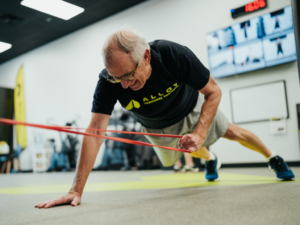
One of the most encouraging findings from the ACSM materials is that nontraditional training methods can be highly effective. Evidence supports elastic bands, bodyweight exercises, and home-based routines as effective options for improving strength, hypertrophy, and physical function.
In other words, resistance training is not limited to barbells or selectorized weight training equipment. While this type of equipment can be useful, they are not the only path. For many adults, bands, dumbbells, cables, suspension trainers, and bodyweight movements provide more than enough resistance to build strength and improve function.
This is good news for people who feel intimidated by large gyms or assume they need access to complex equipment. You can build an effective program with accessible tools when the exercises are selected well and progressed over time.
The principle is not fancy equipment, just progressive resistance.
6. Advanced Techniques Are Optional
The ACSM position stand also challenges a few common assumptions in the fitness world. Training to momentary muscle failure, using specific types of equipment such as machines versus free weights, complex periodization, set structure, and other advanced methods did not consistently change outcomes for the average healthy adult.
That does not mean these methods are useless. In certain contexts, with specific goals and experienced trainees, advanced techniques may have a place. But for most adults seeking better strength, muscle, health, and function, they are not required.
This is a powerful reminder: complicated does not automatically mean better.
Many people delay starting because they think they need to understand every detail first. But the science points back to the basics. Train consistently. Use appropriate resistance. Work major muscle groups. Progress gradually. Choose exercises that match your body and goals.
The Alloy Approach: Simple, Smart, Sustainable
The new ACSM position stand reinforces what effective coaching has always understood: results come from consistency, progression, personalization, and the right level of challenge.
At Alloy, resistance training is designed to be approachable and effective. Members are not left to guess what to do. They are coached through workouts that are structured, progressive, and adjusted to their needs.
That matters because most people do not fail due to lack of effort. They struggle because their plan is too random, too aggressive, too boring, or too disconnected from their actual goals.
A strong plan should answer four questions:
- What are we training today to reach long-term goals?
- What level is appropriate today?
- How will we progress safely?
- How will we keep this sustainable?
When those questions are answered, resistance training becomes less confusing and more empowering.
The Bottom Line
The ACSM’s updated position stand makes one thing clear: resistance training works. It improves strength, muscle size, power, endurance, balance, gait speed, and physical function. It supports health, performance, and independence. And most importantly, it does not need to be perfect or overly complex to be effective.
The best strength training program is the one you will actually do.
Start with at least two days per week. Train all major muscle groups. Match your training approach to your goals. Use tools that fit your environment and comfort level. Build gradually over time.
At Alloy Personal Training, we believe strength is for life. Whether your goal is to feel stronger, move better, age well, or regain confidence in your body, the path starts with a smart plan and consistent action.
Get with an Alloy coach for your personalized strength training program today at your nearby Alloy Personal Training location.