In January, it can feel like everyone around you is suddenly talking about resolutions, but making realistic fitness goals should be occuring all year long.
Read more: Move It Monday: How to Make Realistic Fitness Goals All Year LongIf the thought of the new year fills you with more pressure than excitement, you’re not alone. Realistic fitness goals doesn’t mean you have to create a new you or a total dramatic life overhaul. The truth is you don’t need a total life reboot on January 1. You just need a realistic plan—and permission to start small.
In a recent Move It Monday segment, trainer Seth Buckwalter from the Portland area Alloy Personal Training shared practical advice on how to create fitness goals that actually fit your life, especially if you’re over 40 or haven’t exercised in a while. Let’s turn that conversation into a simple, realistic guide you can actually use.
Start With Realistic Fitness Goals Anytime Of The Year
We tend to treat January 1 like some magical reset button. But Buckwalter points out that you don’t have to wait for the first of the year—or even the first Monday—to begin.
1. Quick Start With Small Steps
- Try one or two workouts.
- Test a walk-after-dinner routine.
- Try swapping one snack for something more nourishing.
Think of it as a “soft launch” for your resolutions. You don’t need perfection—you just need momentum.
2. Why Smaller Milestones Work Better To Reach Big Goals
“Work out more” and “eat better” are the top two resolutions every year—and they’re also some of the easiest to abandon, because they’re so vague and huge.
Instead, Buckwalter recommends small, achievable goals that build confidence and consistency. This idea lines up with broader training advice too: focusing on gradual progression, not giant leaps to your body adapt safely and steadily. For example:
- Big Goal For The Year: Run a marathon by the end of the year.
- Realistic Starting Goal: Run (or walk/jog) a 5K by March.
Breaking the big picture into smaller milestones gives you:
- Clear targets
- Built-in motivation as you hit each step
- Less overwhelm and more “I can actually do this”
The Secret Ingredient: Accountability
Goals are hard to reach in isolation. One of Buckwalter’s biggest tips: don’t go it alone. Having someone like a trainer or a small group of fellow workout partners help to hold you accountable. When you know someone’s expecting you, it’s much harder to talk yourself out of showing up. And when the group culture is “go at your own pace,” the pressure and comparison melt away, making it more fun and less intimidating.
Accountability Examples
- Joining a run club where people of all paces show up and move together.
- Signing up for a group class at a gym.
- Working with a personal trainer alone or in a small group.
- Asking a friend, partner, or coworker to be your workout buddy.
Benefits Of Small-Group Training For Goal Achievement
If you’ve ever walked into a giant group fitness class with 40+ people, pounding music, and a coach yelling cues you barely understand, you know it can be overwhelming—especially if you’re new. That’s a big reason small-group personal training is successful and trending.
- You still get community and energy from others.
- A trainer can watch your form, correct mistakes, and keep you safe.
- It’s harder to disappear into the crowd, so your consistency improves.
- It feels more personal and much less intimidating.
Safety is a big theme here. Movements like deadlifts, squats, and overhead presses can be incredibly beneficial—but only when done correctly. Functional strength training emphasizes the proper form, mobility, and controlled progression to drastically reduce injury risk and improve long-term results.
When you’re starting out (or starting again), having a coach or trained professional in the room can be the difference between a powerful habit and a painful setback.
Beating the Intimidation Factor With Small Group Training
Feeling intimidated by the gym is more common than you think—whether you’re brand new, coming back after years away, or trying a group class for the first time. Buckwalter’s advice is simple: talk to someone before you dive in. Instead of walking in and guessing what to do:
- Speak with a trainer or staff member.
Tell them your goals, concerns, and any limitations. - Ask for an assessment.
At Alloy Personal Training, they use functional movement screens—things like overhead squats and reaching patterns—to identify tightness, weakness, or hidden issues before training. This assessment-first approach is especially helpful if you’ve had previous injuries, joint pain, or long breaks from exercise. - Get a customized start.
Based on that assessment, they build a program that fits your body and experience, not a random workout pulled from the internet.
Fitness After 40: Why Strength Matters More Than Ever
If you’re over 40 and thinking, “Is it too late to start?”—absolutely not. In fact, this is one of the most important times to move your body and build strength. Buckwalter points out that:
- People in their 40s and beyond often struggle with muscle loss rather than fat loss.
- Women going through menopause face accelerated changes in muscle and bone density.
- Without strength training, it’s easy to slowly “atrophy” muscles and feel weaker year after year.
Research on osteoporosis and menopause reinforces this: resistance training and impact exercises can help maintain or even improve bone density, while balance and flexibility work reduce fall risk and support independence.
The big takeaway: Lifting real weights isn’t just for bodybuilders—it’s insurance for your future self.
You don’t have to start heavy. You don’t have to train like an athlete. But you do want to:
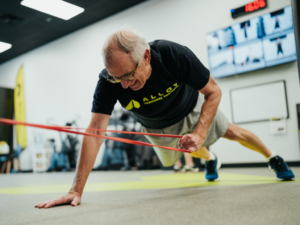
- Challenge your muscles with resistance (weights, bands, bodyweight).
- Progress gradually over time.
- Combine strength, balance, and mobility work.
How to Turn This Into Your Year Round Fitness Plan
Here’s how to put it all together in a realistic, doable way:
1. Pick one main goal for the next 3 months.
- Example: Walk or run a 5K.
- Example: Strength train 2x per week.
- Example: Be active at least 20 minutes a day, 5 days a week.
2. Break it into weekly actions.
- Week 1–2: Go to the gym once per week + one walk.
- Week 3–4: Two gym days + one walk.
- Week 5–8: Two gym days + two walks, or add a short run/block of intervals.
3. Add accountability.
- Join a small-group training session.
- Grab a friend and sign up for the same class.
- Commit to checking in daily with someone by text.
4. Get assessed if you’re new or returning.
- Ask your gym or studio: “Do you offer a movement screen or assessment before starting?”
- Share any injuries, surgeries, or pain you’ve had, especially in knees, hips, back, or shoulders.
5. Make safety your baseline rule.
- If it hurts in a sharp, “wrong” way, stop.
- Prioritize form over how much weight you’re lifting.
- Give your body recovery time and don’t be afraid to scale back when needed.
6. Adjust for life season, not just the calendar.
- If you’re navigating menopause, long work days, caregiving, or stress, it’s okay to slow progression. Consistency beats extremes every time. Glasp+1
You Don’t Need To Wait For Perfect: Just Start
At the end of the day, sustainable fitness isn’t about chasing a perfect January or crushing a resolution in 30 days. It’s about:
- Starting where you are.
- Choosing goals that fit your real life.
- Surrounding yourself with people and professionals who support you.
- Protecting your body with smart, safe training.
Whether you’re 25 or 65, just returning to movement or lifting weights for the first time, you deserve a plan that feels doable—not crushing. So don’t wait for the “perfect” date. Lace up, reach out, and take one small, realistic step today. Your future self will be so glad you did.
Contact your local Alloy Personal Training location and schedule an assessment or a personalized goal setting session.
More Information
Seth Buchwalter Linked In Profile
Alloy Personal Training in Beaverton Oregon: Cedar Hills Crossing, Beaverton, OR